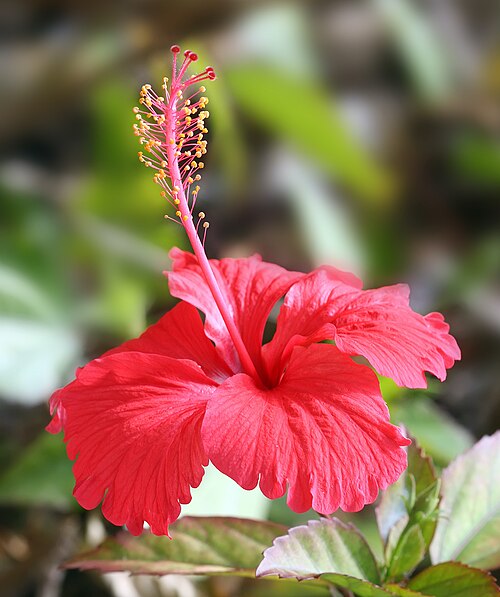
Hibiscus
What Is Hibiscus?
Hibiscus is a diverse group of flowering plants celebrated for its wide, trumpet-like blooms and bold tropical color. The genus Hibiscus likely originated across warm regions of the Old World tropics—especially Asia and the Pacific—then diversified widely, with many species now native to Africa and the Americas as well.
Significance comes from both ornament and utility: hibiscus shrubs and perennials are staples of gardens in frost-free and temperate climates, and several species are important for beverages, fiber, and traditional remedies. In the modern cut-flower and nursery industries, hibiscus is primarily a container and landscape plant rather than a dominant cut stem, but it is produced at large scale in tropical and subtropical horticulture.
The Hibiscus Scientific Classification: Genus Hibiscus in the Malvaceae
Hibiscus sits within the Malvaceae (mallow family), a lineage that also includes cotton, cacao, and okra. Botanists recognize over 200 species in the genus Hibiscus (counts vary by authority), alongside thousands of named horticultural cultivars and hybrids selected for flower size, color patterning, and growth habit.
Commonly cultivated representatives include Hibiscus rosa-sinensis (the tropical garden hibiscus), Hibiscus moscheutos (hardy hibiscus), and Hibiscus sabdariffa (roselle). These species share hallmark mallow traits such as a prominent staminal column and often mucilaginous plant tissues.
Petals, Staminal Columns, and Color Fireworks: Hibiscus in Detail
The hibiscus “flower” is typically a single large bloom with five broad petals (though doubles exist through breeding), radiating around a long central staminal column tipped with pollen-bearing anthers. Many species open to 8–15 cm across, while showpiece cultivars—especially among hardy hybrids—can reach 20–30 cm under ideal conditions.
Colors range from white and butter-yellow to crimson, magenta, and near-black maroon, often with a contrasting “eye” at the throat. Fragrance is variable: many tropical hibiscus cultivars are lightly scented or scentless, while some species carry a soft, sweet note; where scent is present, it can include floral volatiles such as linalool and benzyl alcohol (common fragrance compounds across many ornamentals).
Leaves are usually alternately arranged and can be glossy and oval (common in tropical shrubs) or large and softly textured in hardy perennials. Stems range from woody and multi-branched in tropical forms to herbaceous and winter-dormant in temperate species, a difference that strongly shapes pruning and overwintering care.
Where Hibiscus Thrives: Native Ranges, Sunlight, and Soil Needs
Hibiscus species occupy habitats from coastal dunes and wetlands to forest edges and disturbed ground, but most cultivated forms share a love of full sun (6–8+ hours daily) for best flowering. Tropical shrubs such as Chinese hibiscus (Hibiscus rosa-sinensis) are typically grown in frost-free climates or as containers brought indoors, often reaching 1.5–3 m tall with a similar spread in landscapes.
Temperate gardeners often choose Hardy hibiscus (Hibiscus moscheutos), a North American species complex adapted to moist soils; it commonly grows 1–2.5 m tall and 0.9–1.5 m wide. Bloom season for many hibiscus is long and dramatic: tropical forms can flower nearly year-round in warm climates, while hardy hibiscus typically blooms from mid-summer into early fall, with individual flowers lasting about 1 day each but produced in succession for 6–10 weeks.
Soils should be fertile and well-drained for most shrub types, with regular watering during active growth; hardy hibiscus tolerates heavier, moisture-retentive ground better than many ornamentals. A slightly acidic to neutral pH (~6.0–7.0) suits many cultivated plants, and consistent feeding can boost bud set in heavy bloomers.
Hibiscus and Its Pollinators: Nectar Rewards and Reproductive Strategy
Hibiscus flowers are built for attention, offering nectar and abundant pollen to a suite of visitors including bees, butterflies, hawkmoths, and—especially in tropical regions—sunbirds and hummingbirds. The prominent staminal column functions like a landing guide and pollen brush, a classic example discussed in Pollination biology research on floral architecture and animal behavior.
After successful fertilization, many species form dry capsules containing multiple seeds, which may be dispersed by gravity, water, or disturbance depending on habitat. In wetlands, hardy hibiscus populations can contribute to late-season nectar availability, supporting pollinator activity when many spring and early-summer blooms are long finished.
Hibiscus in Food, Medicine, and Symbolism: From Gardens to Cups
Across cultures, hibiscus carries meanings of beauty, hospitality, and fleetingness—an echo of blossoms that often last a single day. In art and dress, large hibiscus motifs signal the warmth of the tropics; in many island traditions, the flower is worn in the hair as a social symbol as well as an ornament.
One of the most globally consumed hibiscus products comes from Roselle (Hibiscus sabdariffa), whose fleshy red calyces are harvested for beverages, syrups, and preserves. The tart ruby infusion known as Hibiscus tea is rich in organic acids and anthocyanins; the sharp flavor is largely driven by acids such as hibiscus acid and citric-like components, while the deep red color comes from pigments including delphinidin- and cyanidin-based anthocyanins.
Commercially, roselle is grown widely in tropical and subtropical agriculture, with major production across parts of Africa and Asia for dried calyces traded into global beverage markets. Meanwhile, ornamental hibiscus cultivars fuel a substantial nursery trade in warm regions, where container plants are produced by the millions annually, even if hibiscus is not among the top-ranked global cut flowers by auction volume.
Surprising Facts About Hibiscus
- Botanical authorities generally recognize 200+ species in the genus Hibiscus, spanning shrubs, trees, and herbaceous perennials.
- Many hibiscus flowers are “one-day wonders”: a bloom often opens in the morning and withers by evening, yet plants can flower for weeks to months via continuous bud production.
- Hardy hibiscus hybrids derived from H. moscheutos can produce dinner-plate blooms reaching 20–30 cm across in peak conditions.
- The signature central column is not a single stamen—it's a fused structure holding many stamens, a defining trait shared with other mallows.
- Roselle calyces are typically harvested when plump and bright; drying concentrates their tartness and color, helping the tea keep its vivid red hue in storage.
- Tropical hibiscus shrubs can flower nearly year-round where nights stay warm, but in cooler climates they often pause blooming when light drops in winter.
- Some hibiscus cultivars are bred specifically for double or ruffled forms, increasing apparent “petal” count well beyond the typical five.