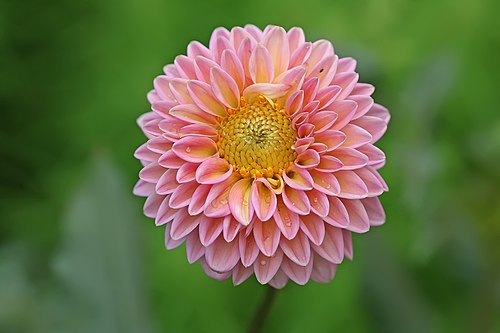
Dahlia
What Is the Dahlia Flower of Mexico and Modern Gardens?
Dahlia is a tuberous, summer-blooming flowering plant best known for its dramatic, geometric heads and extraordinary range of colours and forms. It originates primarily from the highlands of Mexico and parts of Central America, where wild species evolved in cooler mountain climates before captivating global horticulture.
Today, dahlias are signature plants for late-season borders and for the vase, with thousands of cultivars bred for cut-flower performance, exhibition symmetry, and pollinator-friendly singles. In Mexico, the dahlia has long been valued as a native emblem, linking cultivated beauty to Mexico’s native flora and deep botanical history.
The Dahlia's Scientific Classification: Genus Dahlia in Asteraceae
Dahlias belong to the family Asteraceae (daisy family), one of the largest plant families on Earth and the same family as sunflowers and zinnias. The accepted genus is Dahlia, and modern references typically recognise about 40–42 species, though historical lists and ongoing revisions have varied as botanists reconcile wild populations and herbarium records.
Like many ornamentals, dahlias are discussed using both botanical names and cultivar groupings, a useful distinction explained by Plant taxonomy and binomial names. While wild species (such as Dahlia coccinea and Dahlia pinnata) anchor the genus, most garden plants are complex hybrids, commonly referred to collectively as Dahlia × hybrida.
Petal Shapes, Colours, and Stems: Dahlia Identification in Detail
Dahlia flower heads are actually composites: a “bloom” is a packed cluster of florets arranged into a single showy head. Cultivars can range from single forms with one ring of ray florets to fully double “decorative” types with hundreds of tightly layered florets, and pompon forms that are nearly spherical.
Bloom diameter varies widely, from about 5 cm in compact bedding types to 25–30 cm in so-called dinnerplate dahlias. Colours span white, yellow, orange, pink, red, purple, and near-black maroons, with many bi-colours and blends; true blue is absent, a common limitation in many ornamental pigment pathways.
Most dahlias grow on upright, hollow-ish, breakable stems that benefit from staking in windy sites, especially for large-headed cultivars. Leaves are typically opposite, pinnate to bipinnate, and medium to deep green, though some cultivars feature dark bronze foliage that heightens contrast with pastel blooms.
Fragrance is usually light compared with roses, but some varieties carry subtle notes tied to volatile terpenes (such as linalool) and benzenoid compounds in trace amounts. For identification, the combination of composite heads, lush divided leaves, and underground storage organs is distinctive in late summer and autumn borders.
Where Dahlias Thrive: Native Range, Soil, and Seasonal Care
Wild dahlias are native chiefly to Mexico, with extensions into Guatemala and nearby regions, often in upland habitats around 1,500–3,000 meters elevation. This origin helps explain their preference for bright sun, moderate nights, and well-drained soils—conditions that prevent root diseases and encourage sturdy stems.
In gardens, dahlias typically grow 0.3–1.8 m tall with a spread of about 0.3–0.9 m, depending on cultivar and pinching practices. They bloom from mid-summer until frost in temperate climates, with individual plants often flowering continuously for 10–14 weeks when regularly deadheaded and harvested.
Dahlias are heavy feeders that perform best in fertile, loamy soil with a slightly acidic to neutral pH (roughly 6.2–7.0). Consistent moisture is crucial during active growth, but waterlogging is a common cause of failure, especially in clay sites without amendment or raised beds.
Because dahlias store energy underground, winter strategy matters: in regions with hard freezes, growers lift and store the tuber clumps after frost blackens the foliage. Best practice revolves around Tuber propagation and overwintering care—drying, labeling, and storing at about 4–7°C with moderate humidity to prevent shriveling or rot.
Dahlias and Biodiversity: Pollinators, Seeds, and Garden Ecology
Dahlias can be excellent late-season resources for insects, especially single and open-centered forms that provide accessible pollen and nectar. Their ecological value depends strongly on flower form: heavily doubled cultivars may be visually impressive yet offer little access for bees and hoverflies.
In mixed plantings, dahlias support a wide range of visitors—from bumblebees to butterflies—when paired with other nectar plants and left pesticide-free. The dynamics of these visits are part of Pollinators and flower–insect relationships, and dahlias are often cited as a practical way to extend forage into early autumn.
Seed production varies: species and simpler cultivars can set viable seed, while some exhibition doubles are less fertile. In ornamental breeding, seed is used to create new lines, but most named cultivars are maintained by division, because tuber clumps preserve the exact genetics of the parent plant.
Dahlia Symbolism, History, and the Cut-Flower Economy
Dahlias entered European horticulture in the late 18th century after Spanish expeditions sent seed and plant material from Mexico to botanical gardens. By the 1800s, breeding accelerated, producing the forms now associated with Victorian plant collecting, exhibition culture, and the rise of specialist societies.
In symbolism, dahlias often represent dignity, commitment, and creative strength—meanings shaped by their poised symmetry and their ability to flourish late in the season. In Mexico, they hold national resonance as a native ornamental, and are celebrated as a living expression of local biodiversity.
Modern dahlia culture is also commercial: dahlias are widely grown for specialty cut stems, especially in North America and Europe, where local farms supply weddings and seasonal markets. Within Cut flowers and the global flower trade, dahlias are prized for stem length, colour range, and late-summer timing, though they are not among the longest-shipping flowers because many cultivars bruise and have moderate vase life (often about 4–7 days, depending on variety and harvest stage).
On the scale of cultivation, the dahlia world is vast: there are tens of thousands of named cultivars recorded across national registries and historical lists, with new introductions every year. This abundance reflects more than ornament—it is a century-spanning experiment in shape, pigmentation, and plant habit, all built from a relatively small set of wild species.
Surprising Facts About the Dahlia
- The genus Dahlia is commonly cited at about 40–42 species, yet garden dahlias are mostly complex hybrids rather than direct species forms.
- Dahlia “flowers” are composite heads; what looks like one bloom can contain dozens to hundreds of individual florets.
- Bloom size can range from about 5 cm to 30 cm across, making dahlias one of the most size-variable ornamental genera in common cultivation.
- Many tall cultivars reach 1.5–1.8 m and often require staking because the stems can snap under wind or the weight of large heads.
- Single dahlias are typically better for bees than fully double exhibition types, because pollen and nectar are more accessible.
- In frost-prone regions, tuber clumps are often lifted and stored around 4–7°C to carry prized cultivars safely through winter.
- Despite their huge colour range, dahlias do not produce true blue flowers, a limitation shared by many popular ornamentals.